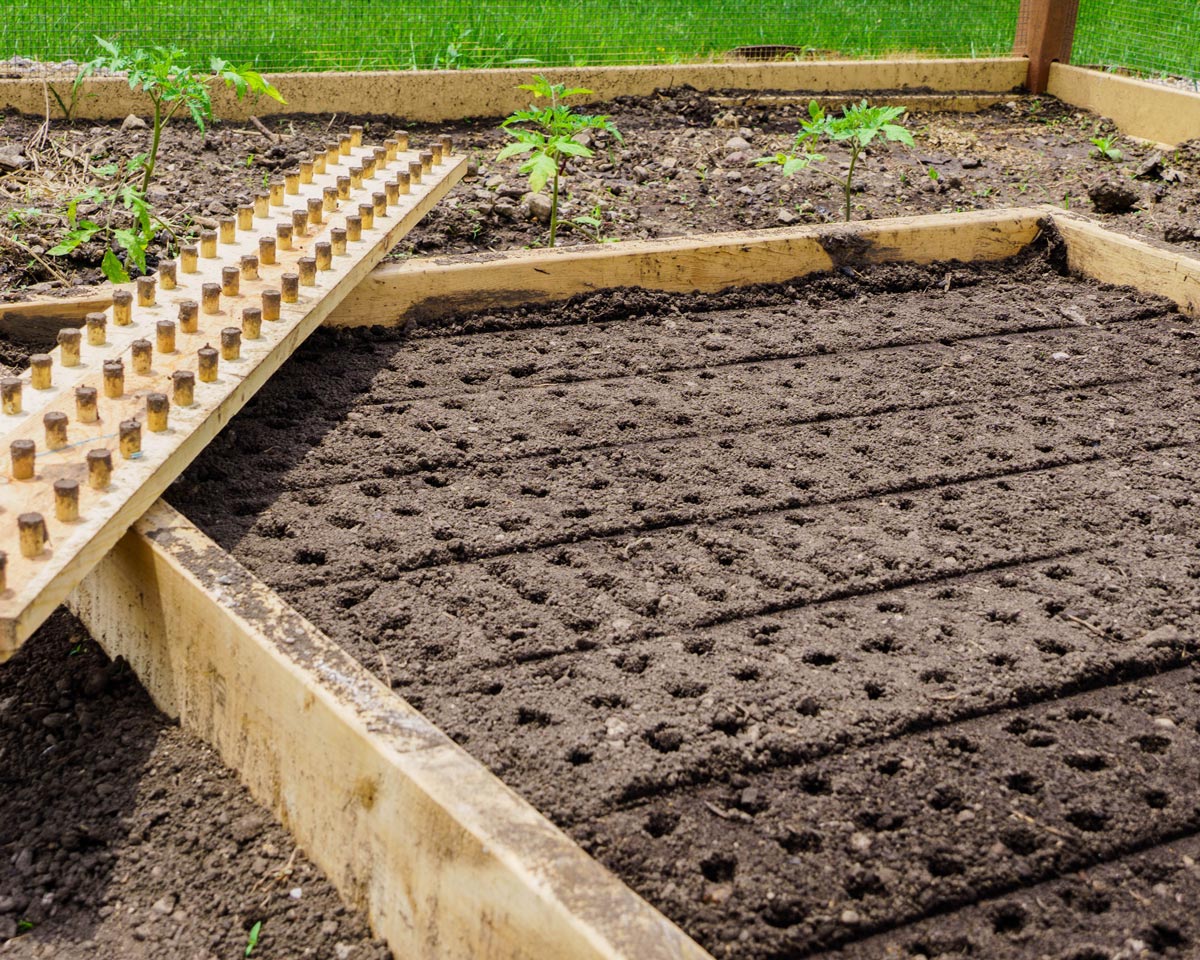
We plant our vegetables much denser than usually recommended. The root vegetables and leafy greens we plant in raised beds are only 2 inches (5 cm) apart. Though they are planted densely, they are planted in straight lines, equally spaced. That makes weeding easier too. Weeding is the most time-consuming task for us. Though we don't have many plant diseases or bugs to deal with, we have an unbelievable amount of weeds each year. It's not easy to differentiate them from the desired plants when they are tiny. If the seeds are planted this way, we know whatever tiny things emerging every two inches are, most likely, the ones we planted.
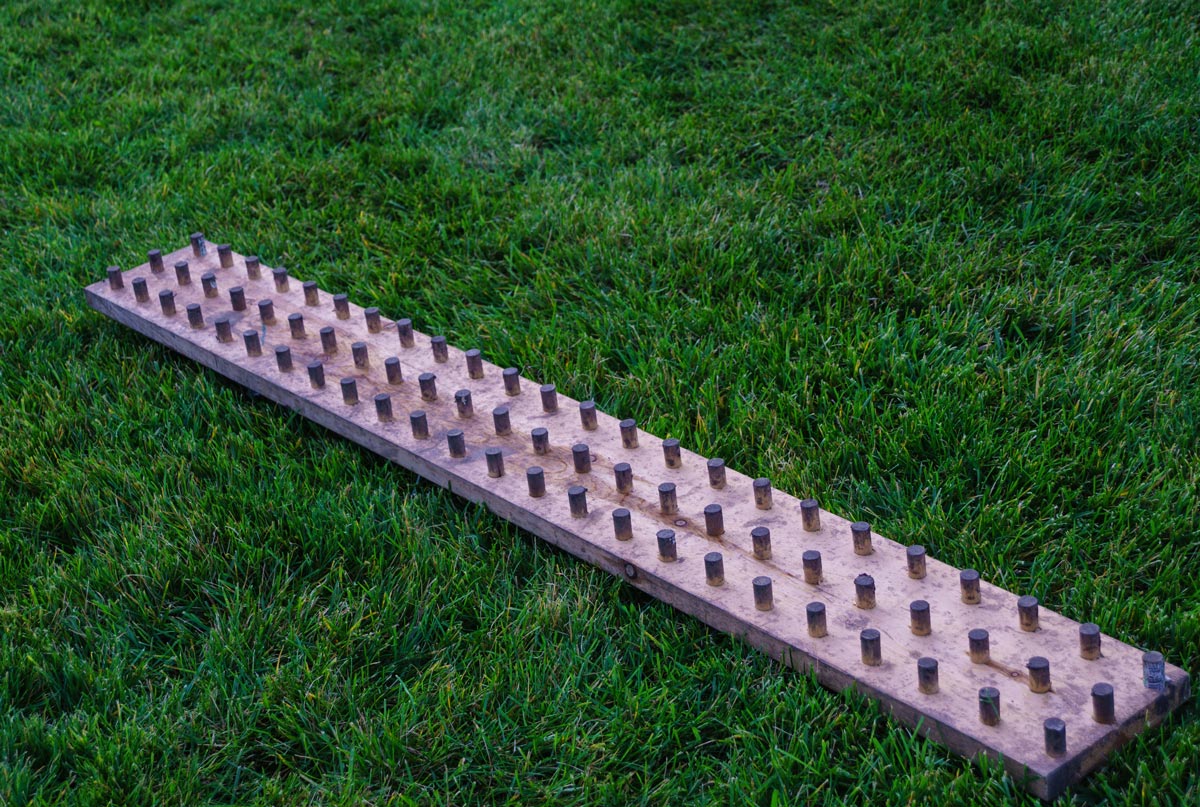
We use a couple of homemade templates and tools to make the planting easier. This one makes holes 2 inches (5 cm) apart. It's made of 6 inch ( 15 cm) wide pine boards and 1/2 inch (1.3 cm) diameter oak dowels. Galvanized iron pipe is used for handles.
That's perfect for our root vegetables and small leafy greens. First the soil is loosened with a small cultivator. A leaf rake is used to level the top of the soil and to remove any rocks or debris. Then the soil top is made damp with a fine spray of water.
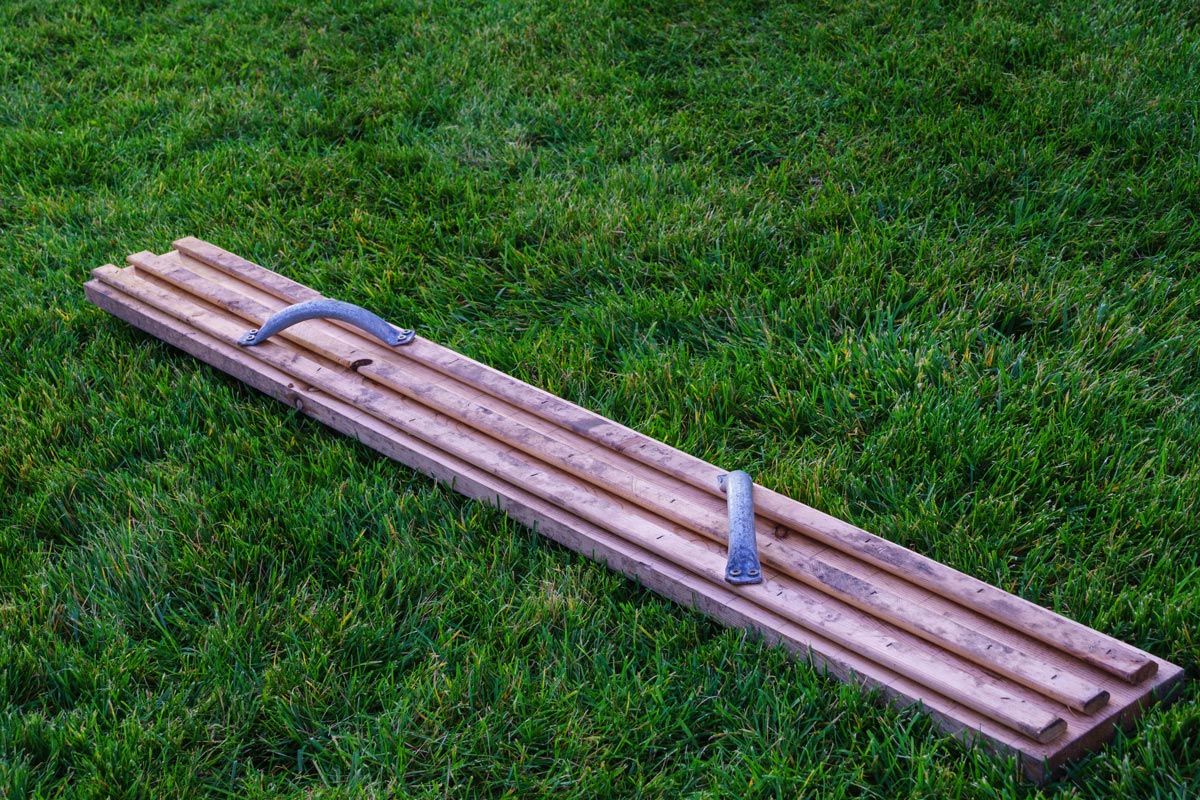
This tool is used to stamp holes then. The handles make it easy to press down and lift up. It's just long enough to fit the width of the bed; it makes about 1200 or so holes per bed. The tedious job is to place seeds into each of the holes.
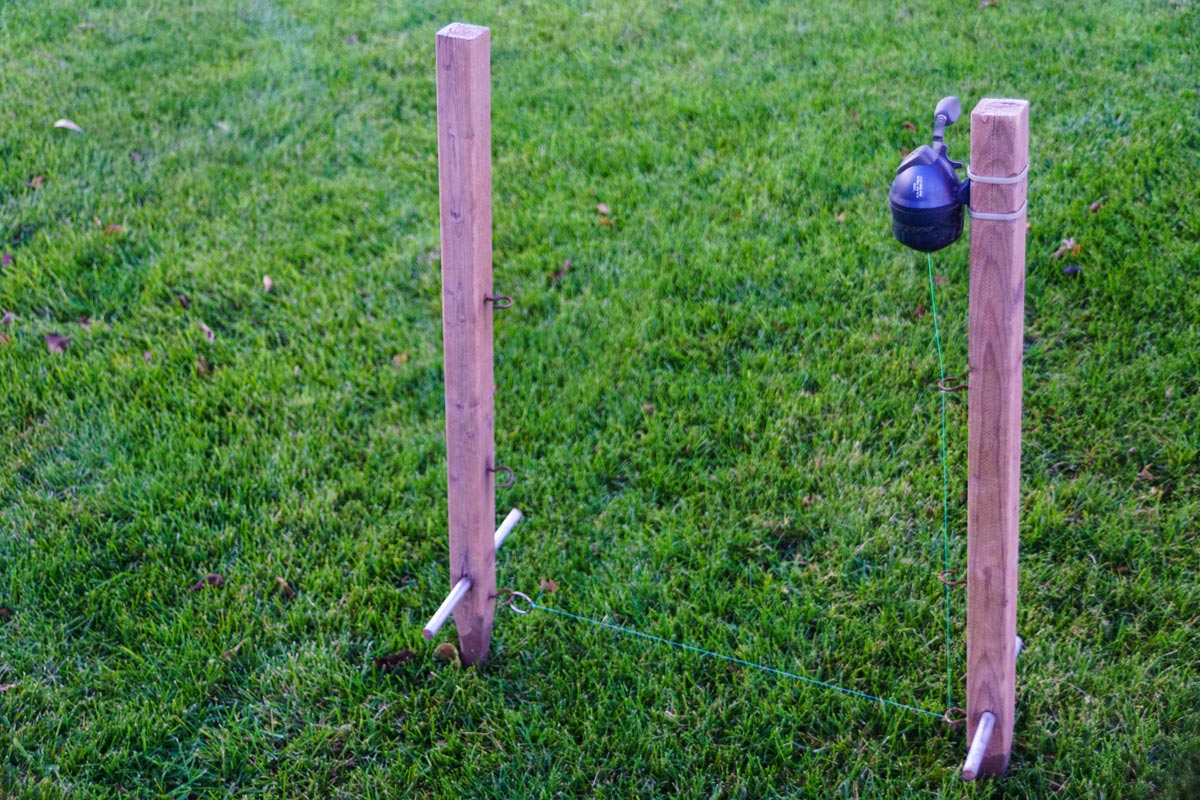
This is used for planting tomatoes and other large plants that need bigger holes, in straight lines. It's made of a fishing reel and fishing line. The fishing reel makes it very easy to extend the line and wind it back, without tangling. A lot better than using just stakes and a line.
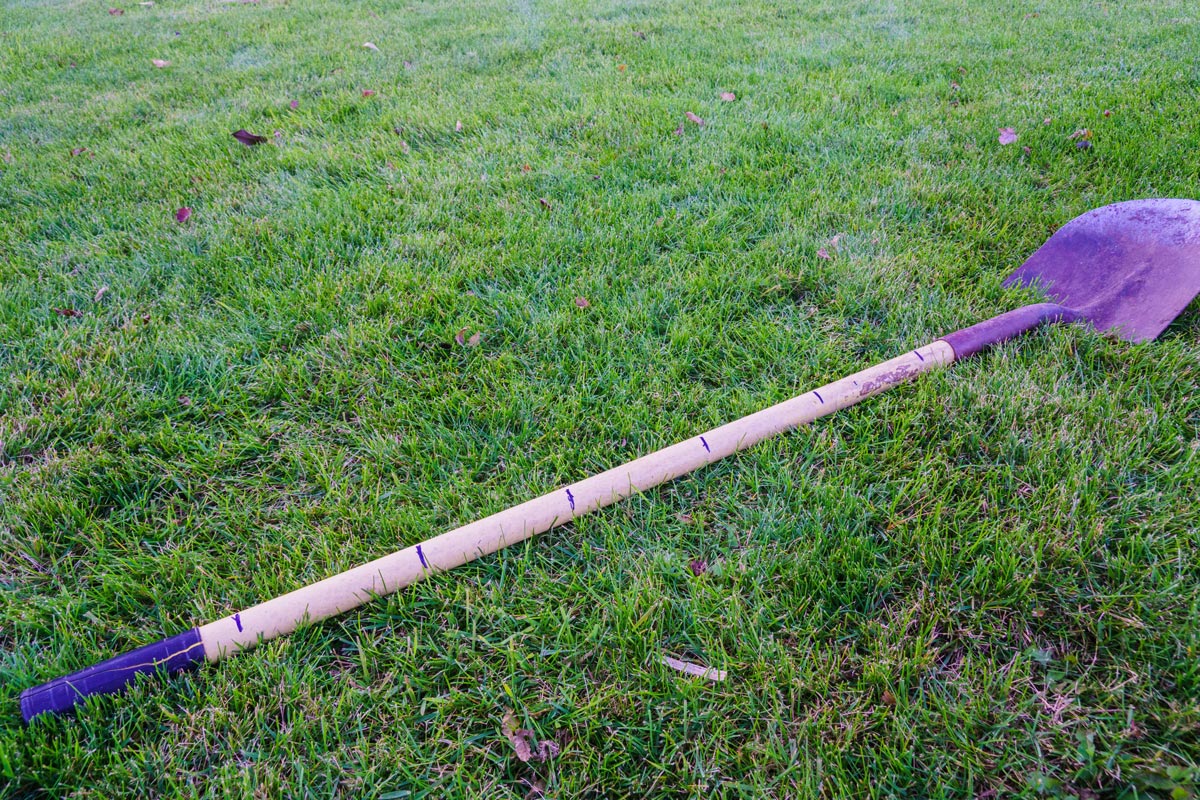
Our digging tools' handles have markings for measurement. That way we can avoid using measuring tapes too.
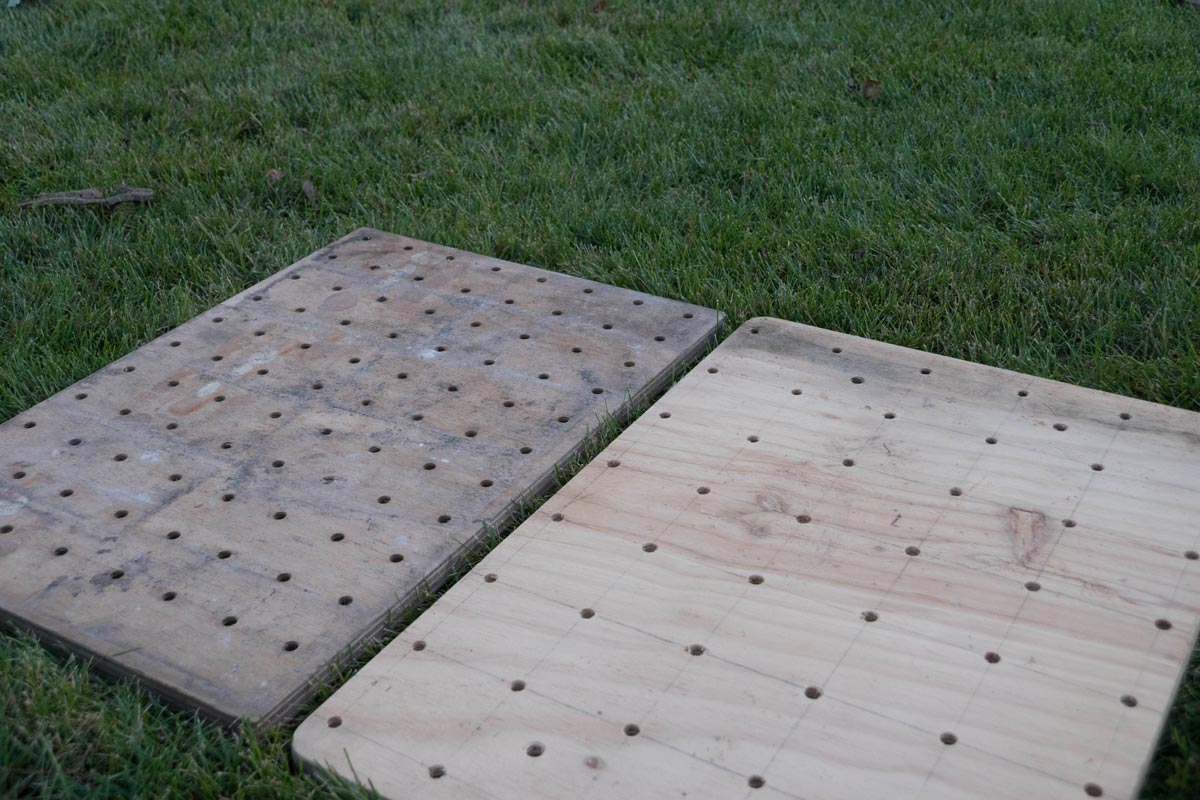
We also have a couple of seeding boards with equally spaced holes. Drop a seed into each hole and gently press with a wooden dowel. That will result in a dense, but equally spaced, set of plants.
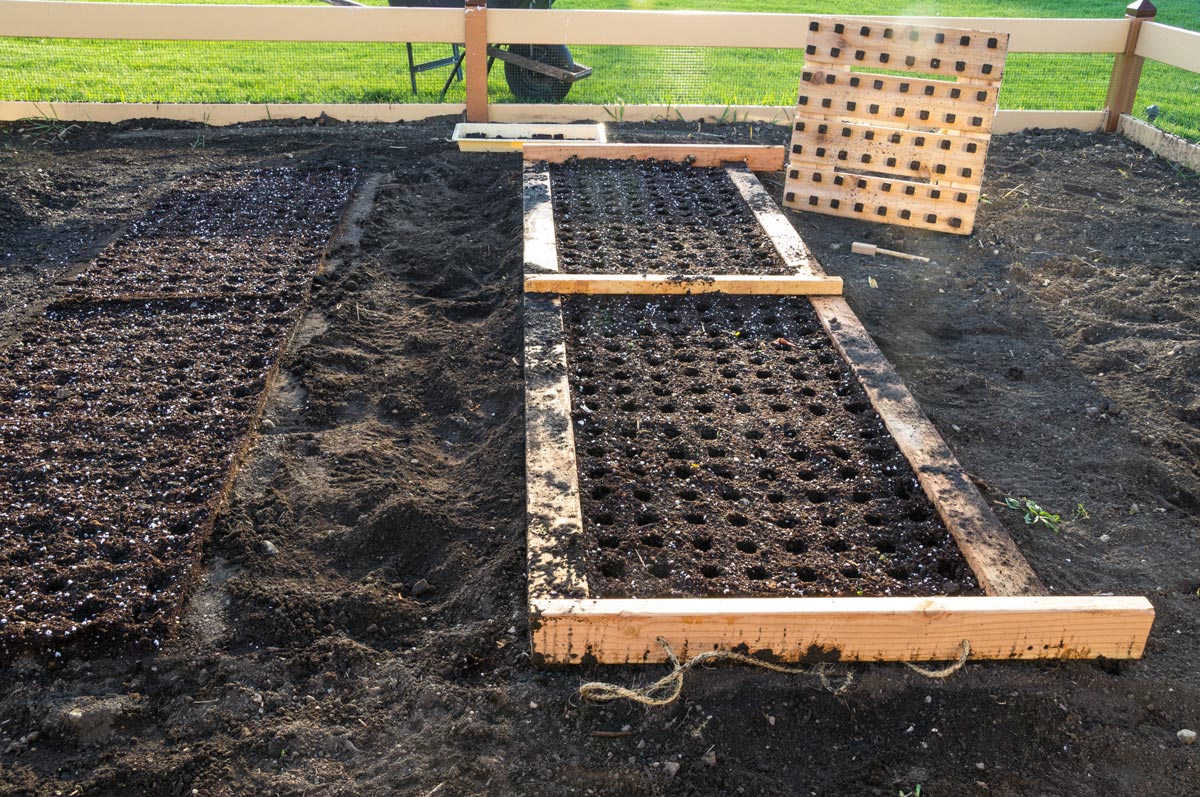
This is a tool we use for transplanting 3/4 inch and 2-inch (1.9 cm and 5 cm) soil blocks. The pins on this are made of 2x2 inch (5cm x 5cm) construction lumber. We use it to plant onion sets in some years too.
Thank you for reading Dispatch № 07.


