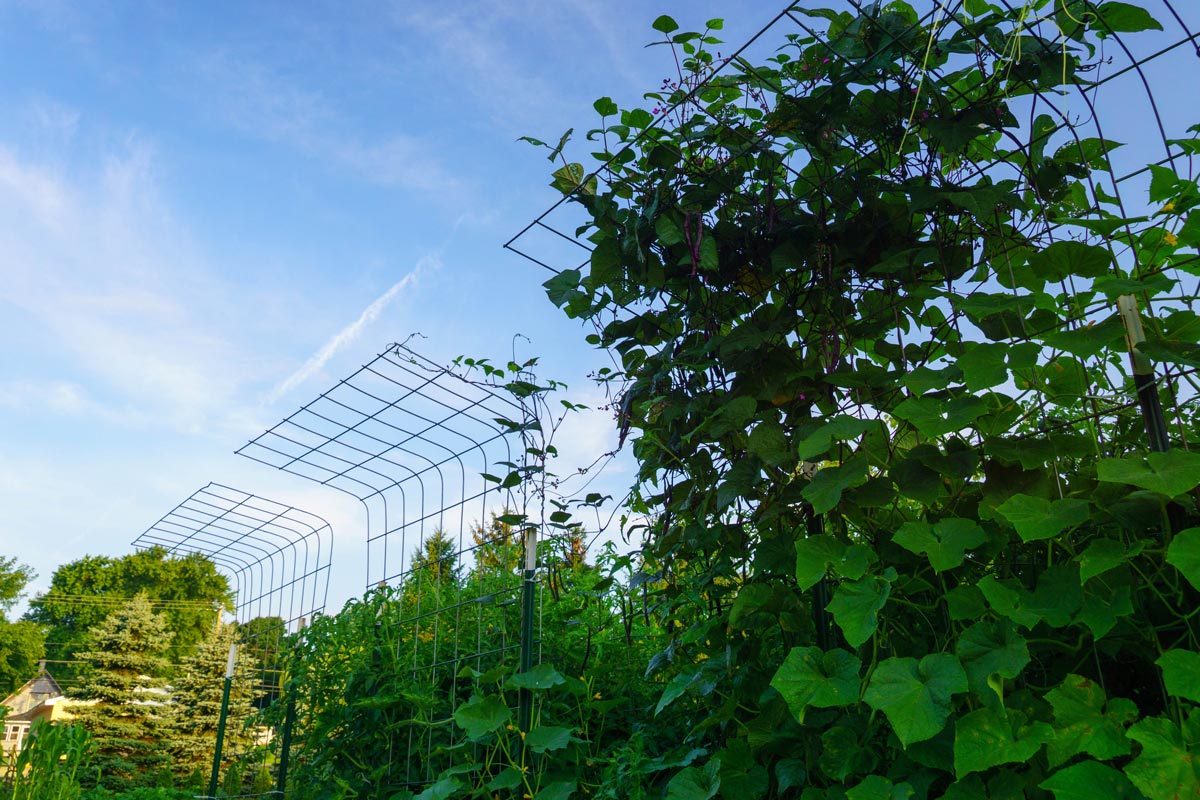
We prefer to grow vining or climbing varieties of vegetable plants, as opposed to bush varieties. Pole beans, indeterminate tomatoes, cucumbers, Asian gourds etc. They take up less space in the garden, can be harvested without bending down, and they generally keep producing new fruits until the end of the season. Determinate tomato and bush bean varieties generally give one big bounty and do not produce much more.
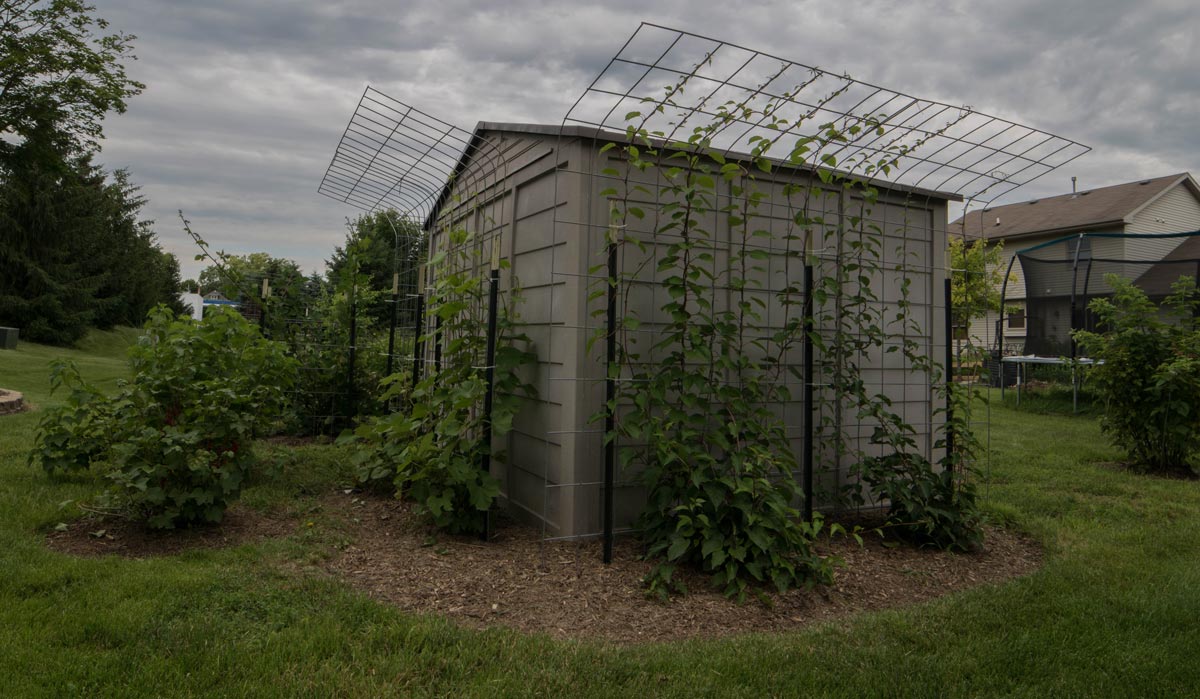
These vegetables should be trellised for the best result. That gives them more sunlight, helps the pollinators find their flowers, and keeps their fruits clean and away from dirt. Makes harvesting easy too.
We make our trellises from 'cattle panels'. Those are made of galvanized steel and are a cheap and very durable product. They are 50 inches (1.27 m) wide and come in 16-foot (4.87 m) lengths. Each is cut into two pieces, and each of those is bent at one end to look like an inverted 'L'. They are then attached to 6-foot-tall (1.82 m) 'T-posts' driven into the ground.
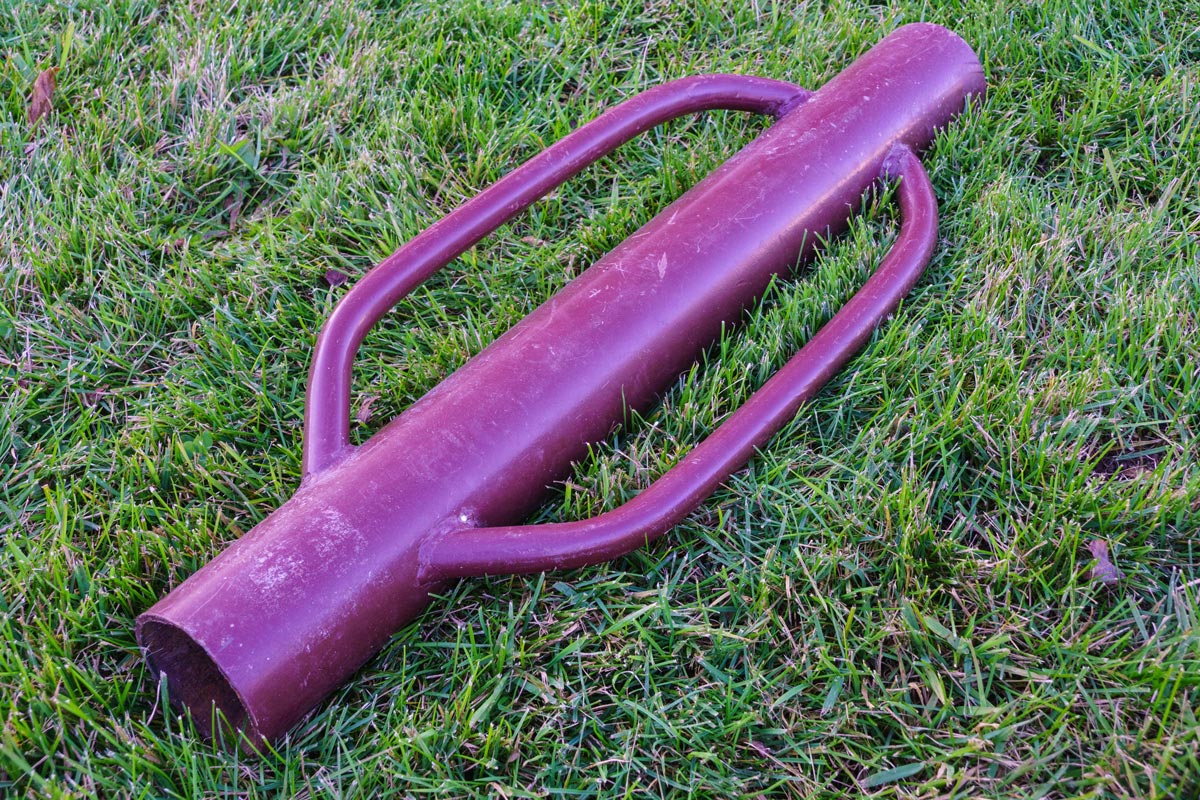
A 'post driver' is used to drive the T-posts. It's an excellent tool for this purpose. It has handles on either side so that both hands can be used to slide it up and then ram the post. That causes less strain on the hand/wrist/arm, compared to swinging a hammer. Also, it hits the post straight down; thus, it causes less damage to the post.
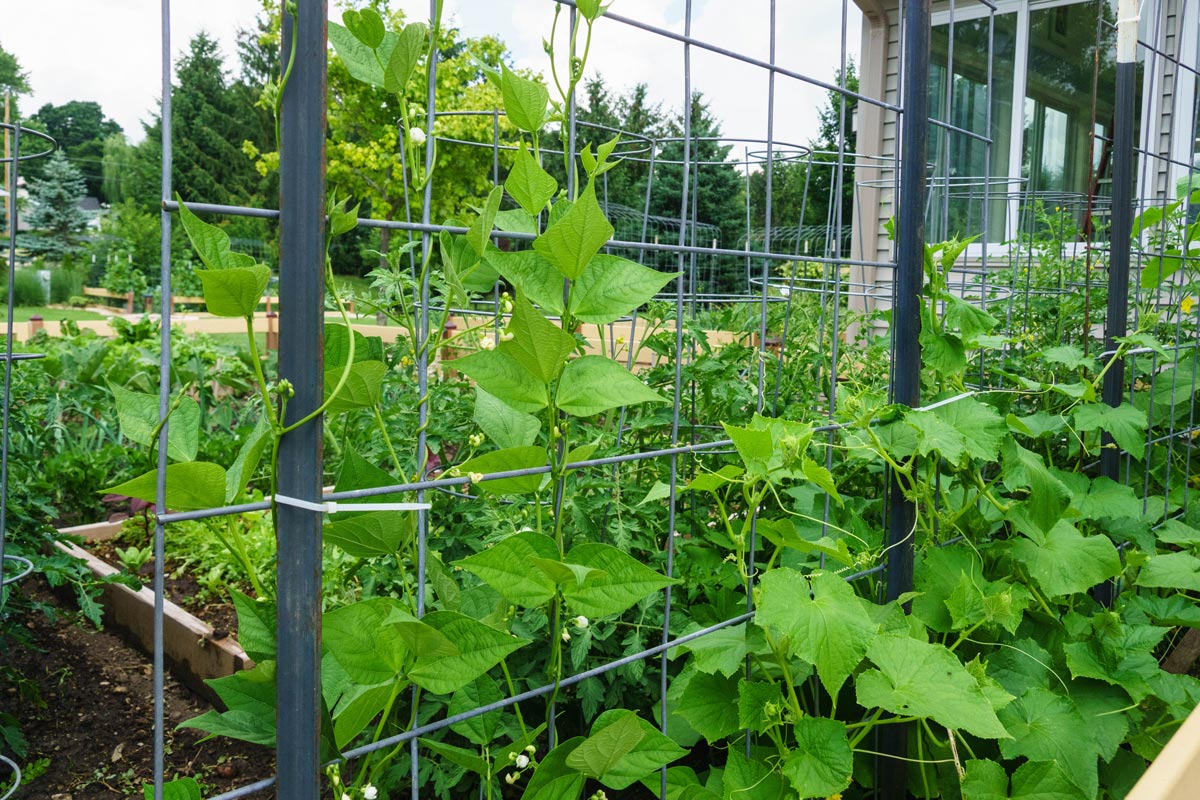
The trellises are attached to the posts using zip ties. Each trellis has two posts supporting it. The posts are on the inside of the bent area. That way, the trellises will lean on to the posts with the weight of the fruits. If they are attached on the other side, they are solely supported by the strength of the zip ties. These trellises are quite sturdy. They can withstand the strongest winds and the heaviest fruit loads. We never had any incident of them toppling.
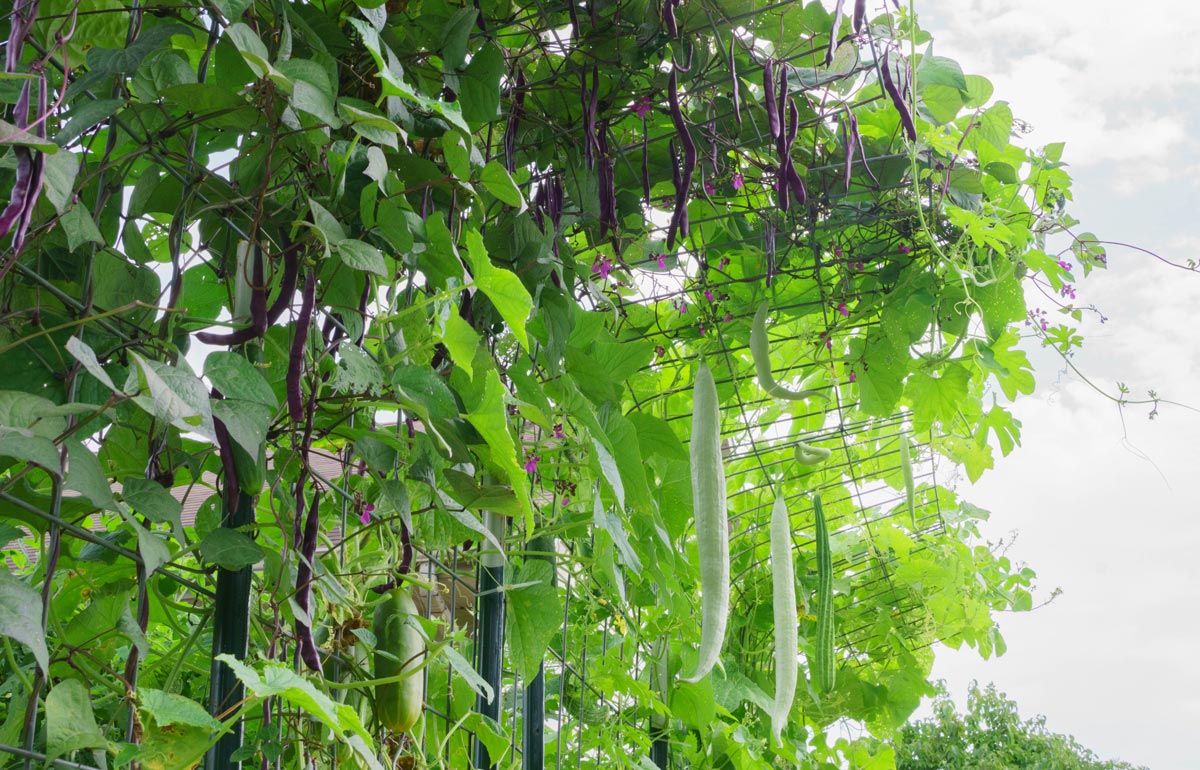
In this photo, you can see (edible varieties of) luffa and snake gourd, and beans on the trellises. If you look closely, you may see a bitter gourd and cucumber too.
All trellises were placed along the sides of the gardens so that they protrude out, giving extra area. Asian gourds and pole beans love them. Cucumbers need some coaxing to stay on them. The shape and placement of the trellises allow us to harvest without stepping into the gardens.
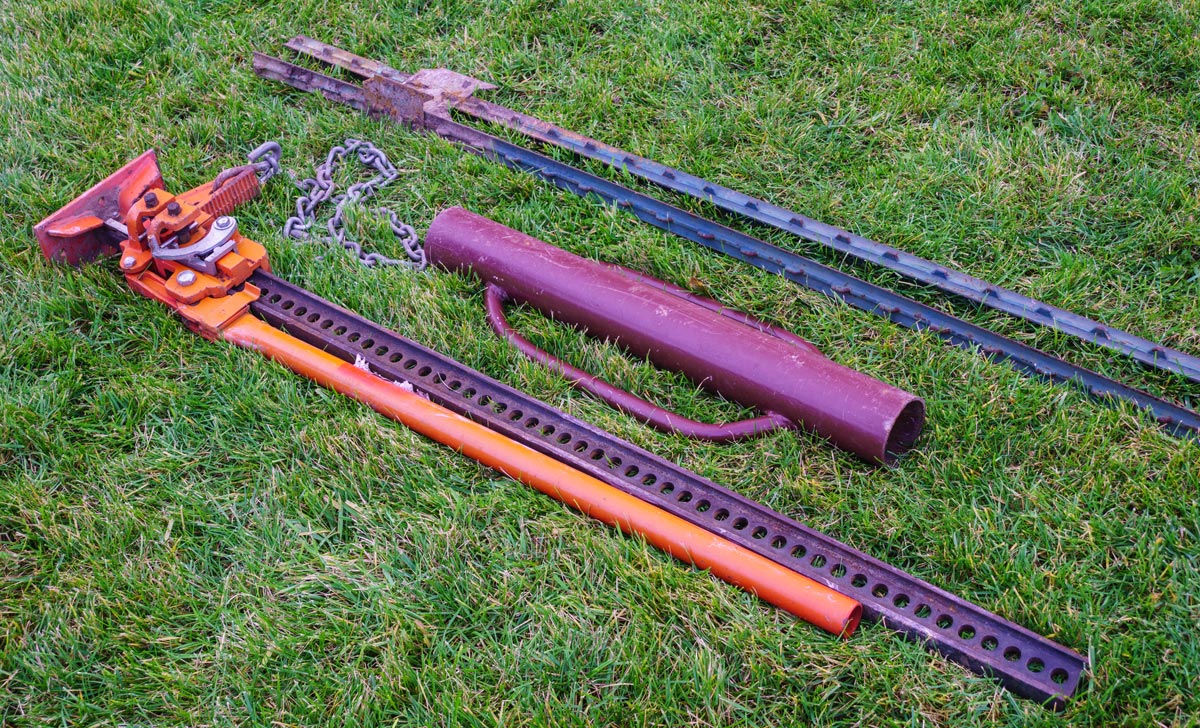
At the end of the season, we remove the trellises and the posts. Most of the posts can be pried out using a long-handled shovel. The tip of the shovel can catch the 'T' of the post, or a stud, and the long handle can be used as a lever. Some of the stubborn ones require a 'farm jack'. It’s not as fast as using a shovel though, and one has to bend down to wrap its chain around the post and then to remove the chain too. However, it can exert a large amount of force to pull those out.
Thank you for reading Dispatch № 03.


