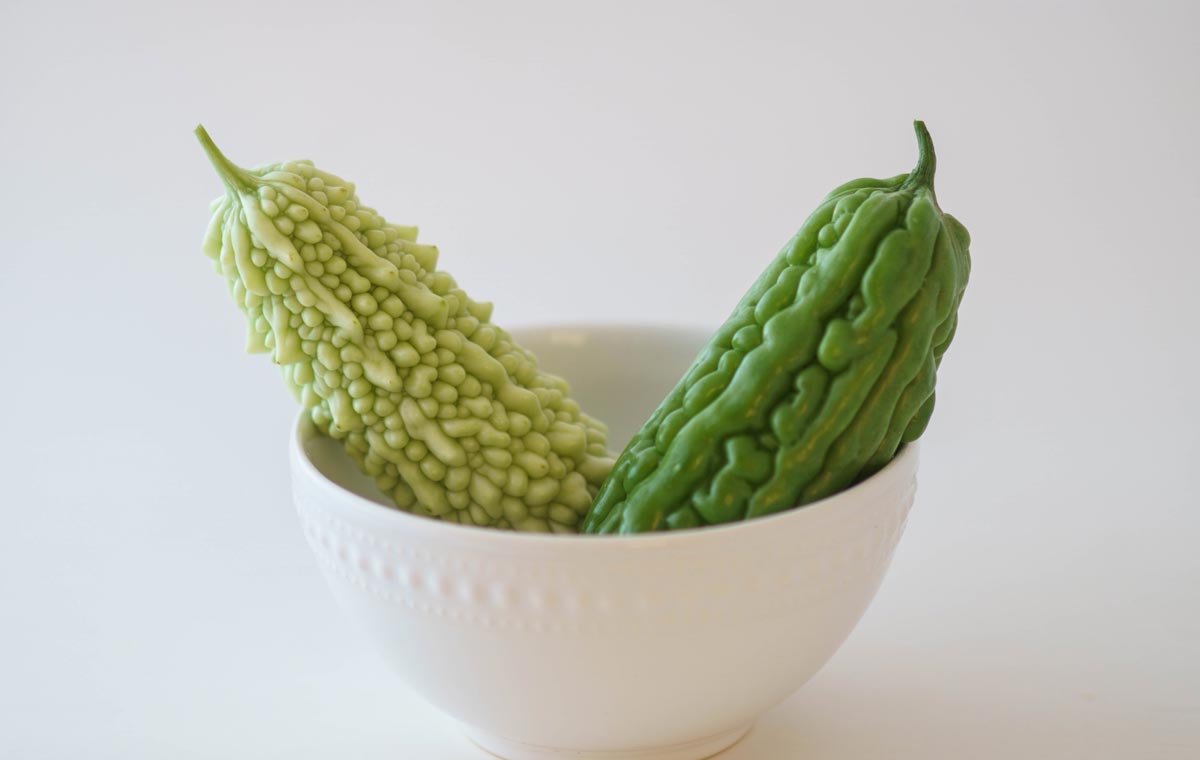
Bitter gourd, snake gourd, ash gourd, hairy gourd, luffa and tindora are vegetables we love. They need a longer growing season than what we have. So, we start them indoors, from seeds, about two months before planting outdoors. Except for tindora. They are propagated by stem cuttings. We have one mother plant in a large pot that we keep inside the house during winters. The stems of that are used to make new plants each year.
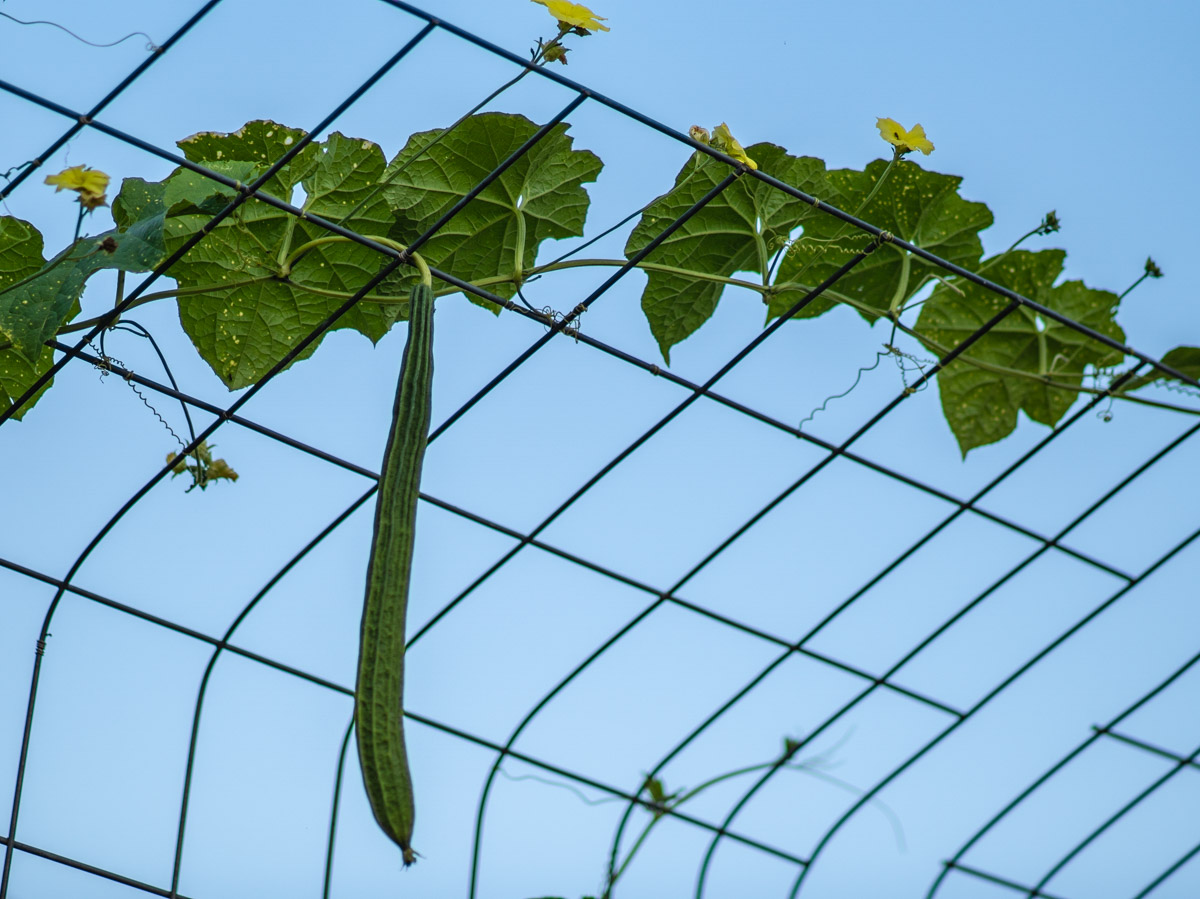
All of them require trellises. Ideally, they should be given plenty of space between the plants. We, however, plant them close and let them grow into each other. Our plants still produce quite well every year. One of the reasons is the abundance of pollinators here. Bees and wasps love to visit their flowers, and we have so many of them in and around the gardens. Although we noticed a significant reduction in the number of bees this year, wasps still were plentiful. In the past we used to destroy every wasp nest that we could find, but stopped that when we realized how useful they are for gardening. These days we leave some grapes, apples and pears unpicked so that the wasps and bees have something to feed on at the end of the season. We can see hundreds of them feeding on the almost rotten fruits in October and November.
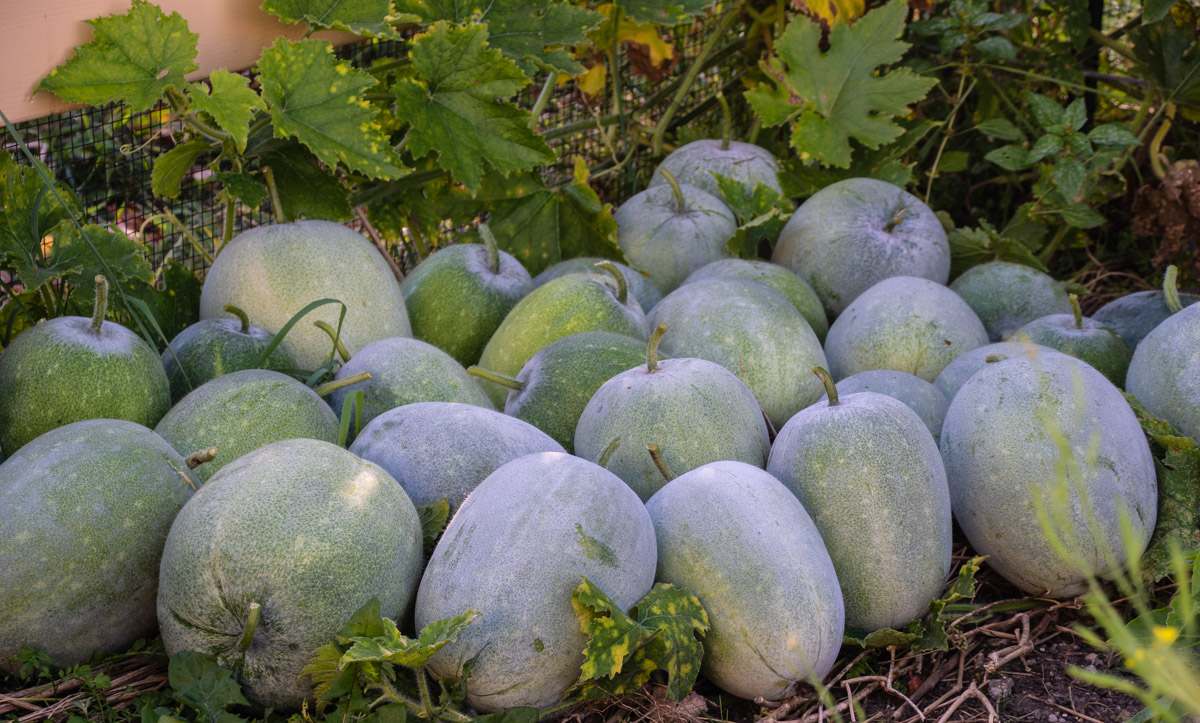
Ash gourd is an ideal vegetable to grow, for our needs. They are quite versatile. Can be eaten raw, juiced or cooked in various ways. They are quite nutritious and said to have medicinal properties too. They stay fresh for months after harvest, at room temperature.
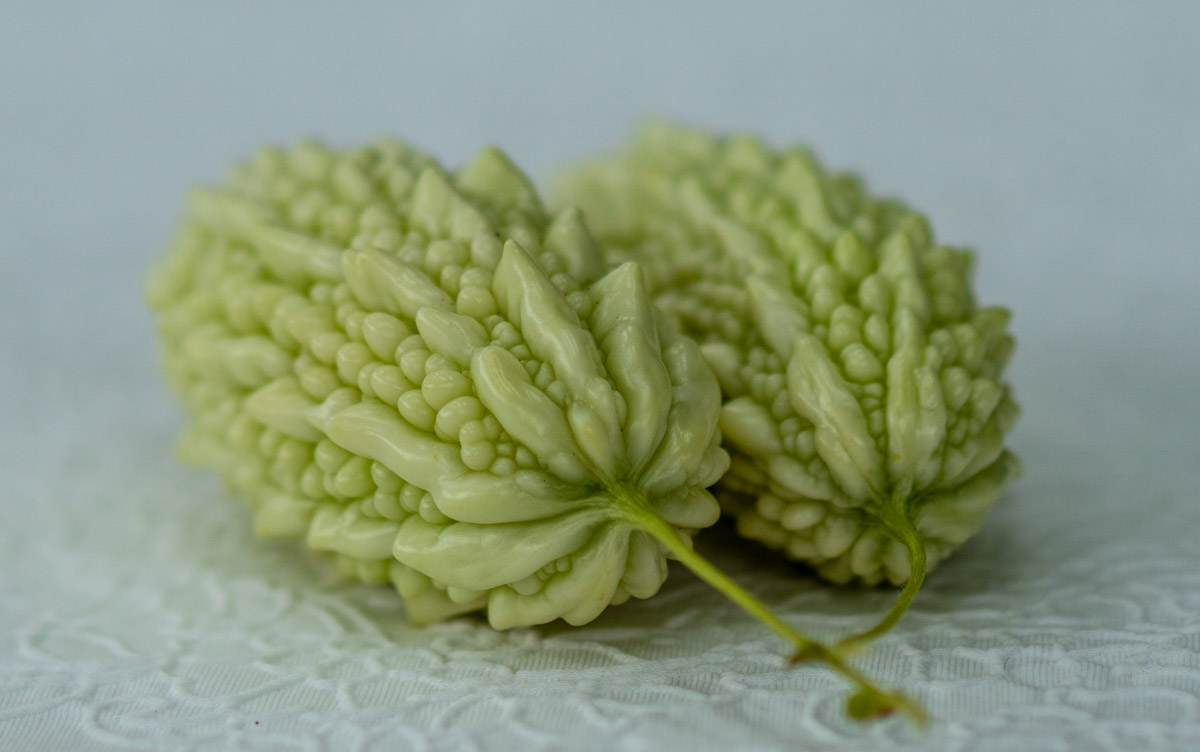
Bitter gourd, also known as bitter melon. Yes, they are quite bitter! They, however, are a delicacy for us. Organically grown ones are not available in any stores here. So the only way to have them is to grow them ourselves. That is true of all Asian gourds, for us.
They are nutrient rich and, when cooked the right way, quite tasty to our palates. We plant several varieties each year. They grow and produce quite well here. Our favorite way of preparing them is to chop finely and stir-fry with an equal amount of grated coconut, along with sliced shallots, green cayenne pepper, curry leaves, salt and turmeric.
The saddest part is seeing hundreds of tiny fruits on the gourd vines wilting with the plants when frost arrives. None of these gourds has any tolerance to cold weather.
Thank you for reading Dispatch № 08.


