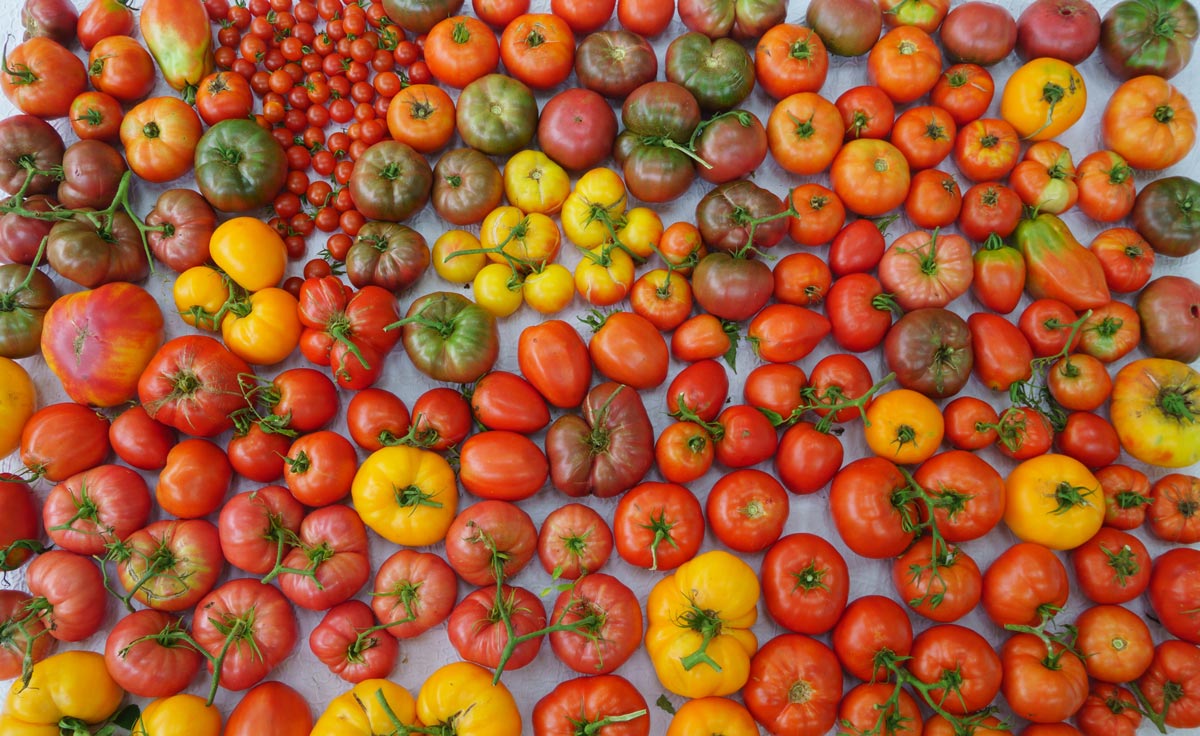
We plant around 30 tomato plants every year. This year we had 16 varieties of tomatoes. Most of them produced well. We plant them about a foot (30 cm) apart. They grow into each other, but produce well nevertheless.
Determinate or Indeterminate
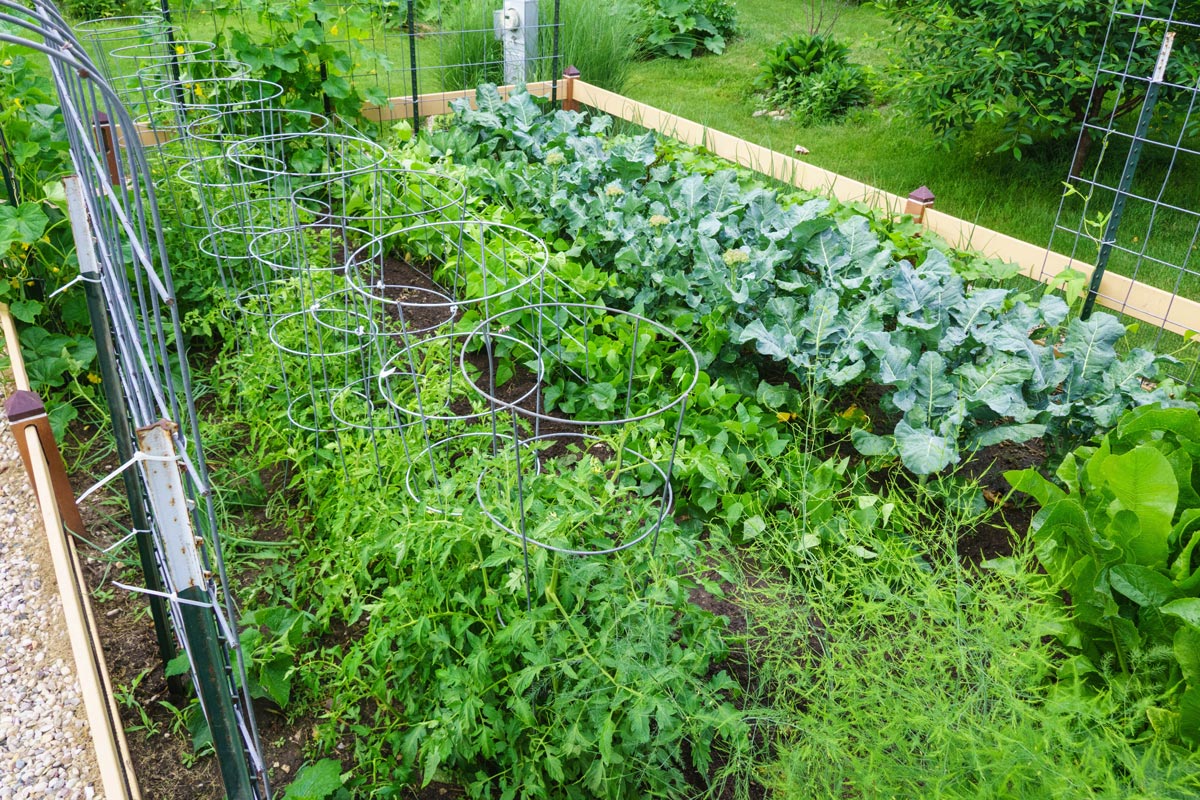
Our preference is to grow indeterminate tomato varieties. Once they start fruiting, they continue to grow and produce until cold weather kills the plants. They need strong trellises or cages for support.
Determinate tomatoes usually give one big harvest. That's ideal for canning, dehydrating or other forms of preserving. Canning involves cleaning large equipment like a pressure canner, a big cutting board etc. So, it makes sense to can a large amount at a time. Dehydrating is more energy efficient when all the trays are filled with vegetables. We grow a few paste tomatoes, like Roma varieties, that are of the determinate type. They do not require cages, and they should not be pruned.
Start from seeds or buy plants
Most of the tomatoes we grow are heirloom varieties that we start ourselves, from seeds, indoors. We buy a few plants from nearby nurseries too. Starting from seeds allows us to choose from hundreds of varieties available online or in seed catalogs. However, for kitchen gardeners like us who grow one or two plants of each variety, buying 15-20 seed packets is not that cost effective. The seeds stay unspoiled for 5 or more years, however. Starting from seeds is well suited for those who grow many plants of the same variety.
These days we can find quite a number of heirloom varieties, including organically grown plants, from nurseries nearby. We bought a couple of plants this year. One of the concerns we have is the chance of diseases and pests that can come with them. We had two store-bought plants dying for unknown reasons this year.
To prune or not
Some growers remove the suckers (new branches that grow between the main stem and side stems) of indeterminate tomato plants. The argument is that then the plants can utilize all their energy on fruit production and not in growing those branches. We don't do that though. First of all, it takes a lot of effort to look for the suckers and remove them. Then there is this argument that un-pruned plants produce better tasting fruits, as they get more sunlight. We prune any branches that tend to fall to the ground or grow into any other plants we love.
Preserving for long term use
Our preferred method of preservation until last year was freezing. We cut them into wedges, spread them in trays so that they don't touch each other, and put them in the freezer. Once they freeze, they are transferred into Ziploc bags and stored in the freezer again. This way we can easily take out what we want for cooking. If the freshly cut pieces are packed straight into containers, they will freeze into one solid block. It will be a pain to take a small portion from that later.
We also used to dehydrate them. For this we slice them and then either dehydrate with salt, pepper and some spices or just by themselves. Dehydrating is a very efficient way of preservation. First of all, dehydrating reduces the volume so much, as all water content gets evaporated away, that a lot can be stored in a small container. Volume can be further reduced by breaking the dried slices into tiny pieces or pulverizing them. Properly dried tomatoes and other vegetables need airtight packaging and cool, dry, dark storage. Storage time depends on temperature and moisture; see the National Center for Home Food Preservation’s packaging and storage guidance. We, however, don't like the taste of dehydrated tomatoes anymore.
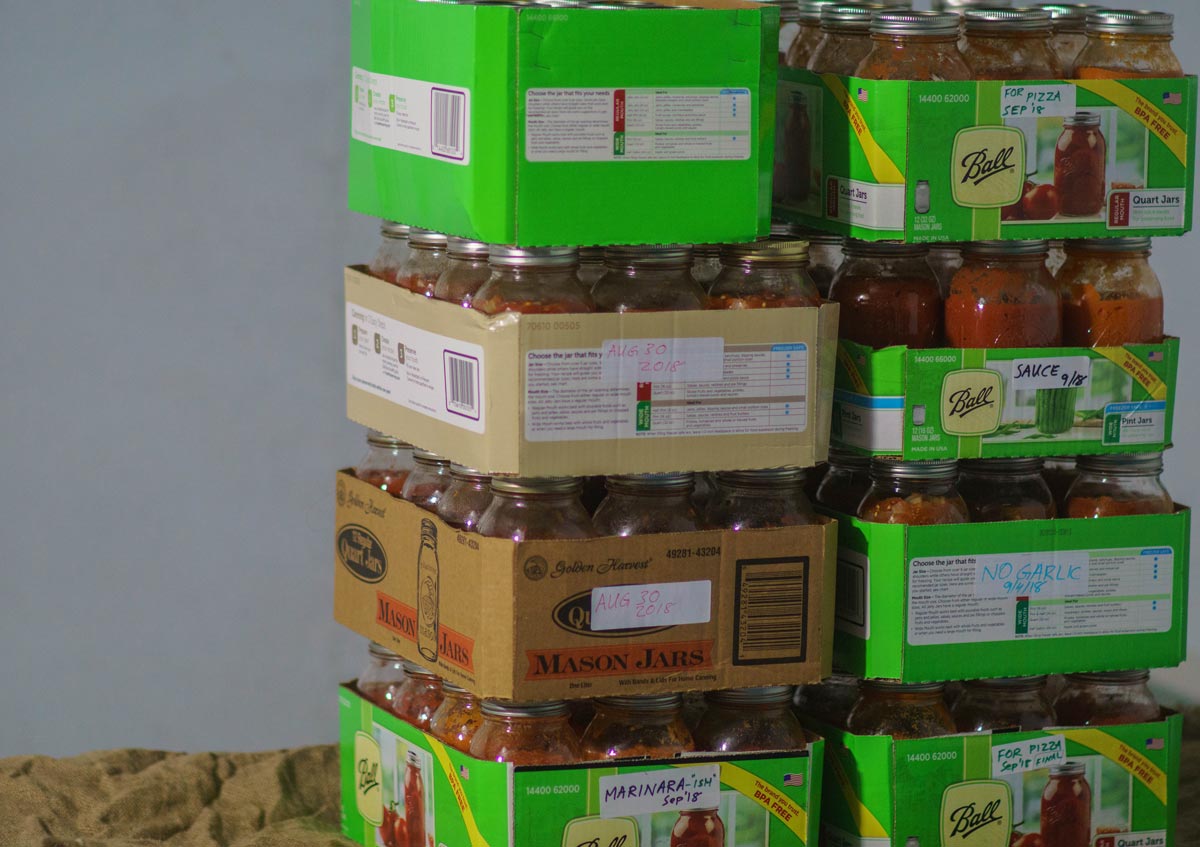
This year we pressure canned most of the tomatoes, either as salsa or sauce. For home canning, follow a tested recipe and its requirements for acidification, processing time, pressure, and altitude. See the National Center for Home Food Preservation’s guidance on canning tomatoes.
Thank you for reading Dispatch № 04.


