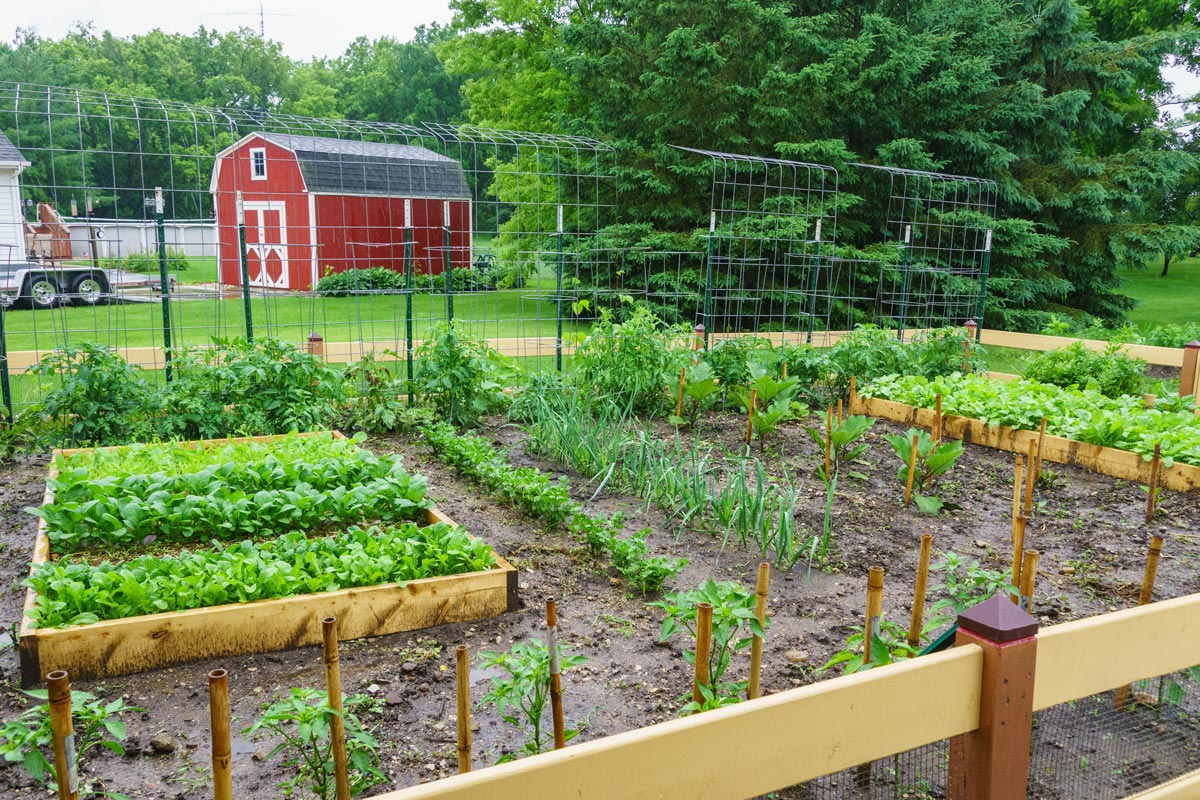
We live in South-East Wisconsin, USA, in USDA Zone 5B. Our winters are too cold for growing anything; however, we get four months a year, from June till September, for gardening. We use this short season to grow and store most of the vegetables we need for the whole year.
Our strategy is to grow plants that give multiple harvests, plant them very close, and grow them vertically as much as possible. The garden currently comprises three separate fenced sections and two open areas. Total area is approximately 2000 square feet (185 square meters).
This year we planted several varieties in each of the following: tomato, okra, eggplant, pepper, zucchini and other summer squashes, corn, bean, broccoli, brussels sprouts, chard, nasturtium, tatsoi, mizuna, komatsuna, arugula, spinach, mustard greens, leek, celery, lettuce, Malabar spinach, moringa (for the leaves), radish, beet, carrot, turnip, potato, shallot, onion, garlic, bitter gourd, snake gourd, luffa, ash gourd, cucumber and herbs.
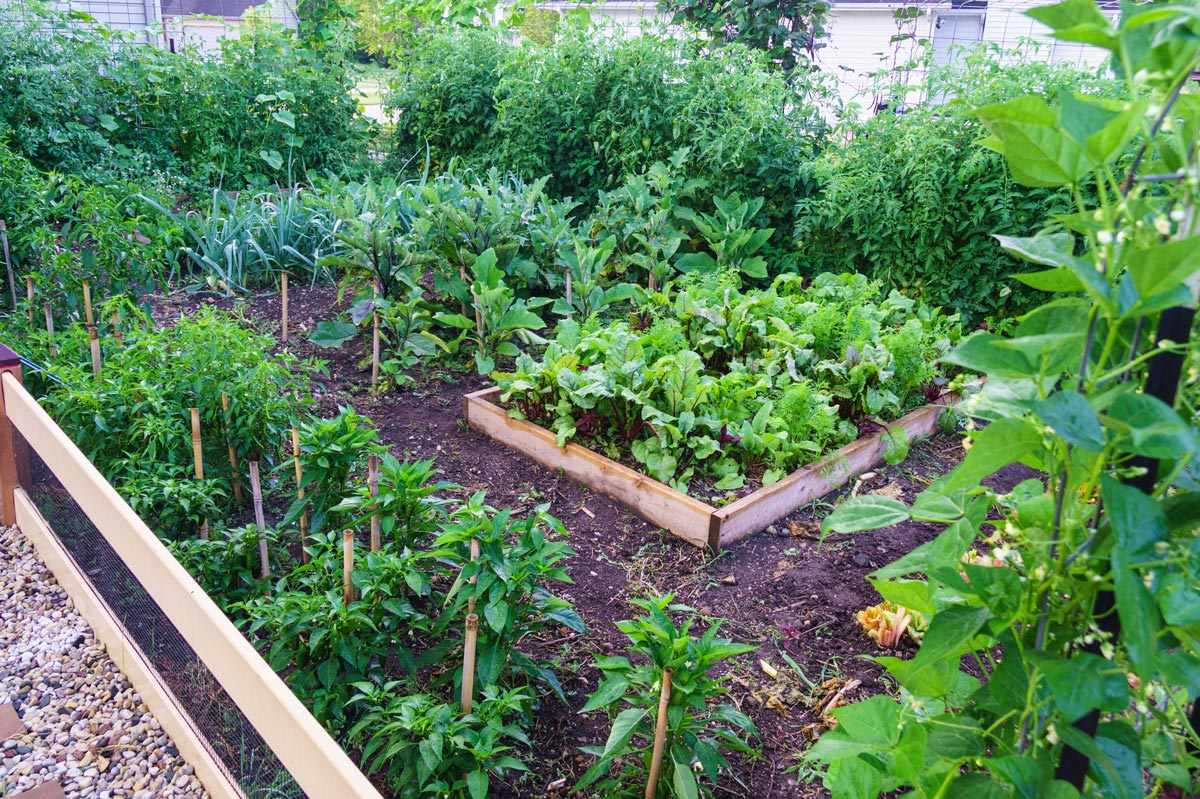
This is our main garden. Planted tomato, eggplant, peppers, leek, celery and chard in the middle. Compact-sized leafy greens were planted in one of the two raised beds. Root crops in the other. Pole beans, Asian gourds and cucumbers near the trellises along the edges.
Items we use almost daily in the kitchen were planted along the edges of the gardens, so that they could be picked without stepping into the (often wet) soil. Onions and shallots were planted between the fences and the trellises, and peppers close to the walkway between the gardens. Herbs were either in pots on the patio or along the edges of the gardens.
Fed all the plants with fish emulsion, compost tea, seaweed, worm castings, compost and composted manure. We now have a good amount of comfrey leaves to feed the vegetable crops. They were planted 5 years ago, as guild plants for our fruit trees. Comfrey’s roots go deep and mine nutrients which they then store in their leaves. We cut them up and spread them as mulch, and made them into tea and used it in foliar sprays. We've been making our own compost and compost tea for many years now.
We firmly believe prevention is better than cure when it comes to plant diseases and insect infestations. So, sprayed neem oil and 'Safer' brand organic insecticidal soap on tomatoes a few times, to guard against fungal diseases. The same soap was sprayed on eggplants, to prevent flea beetle attacks. We also do crop rotation as much as practical.
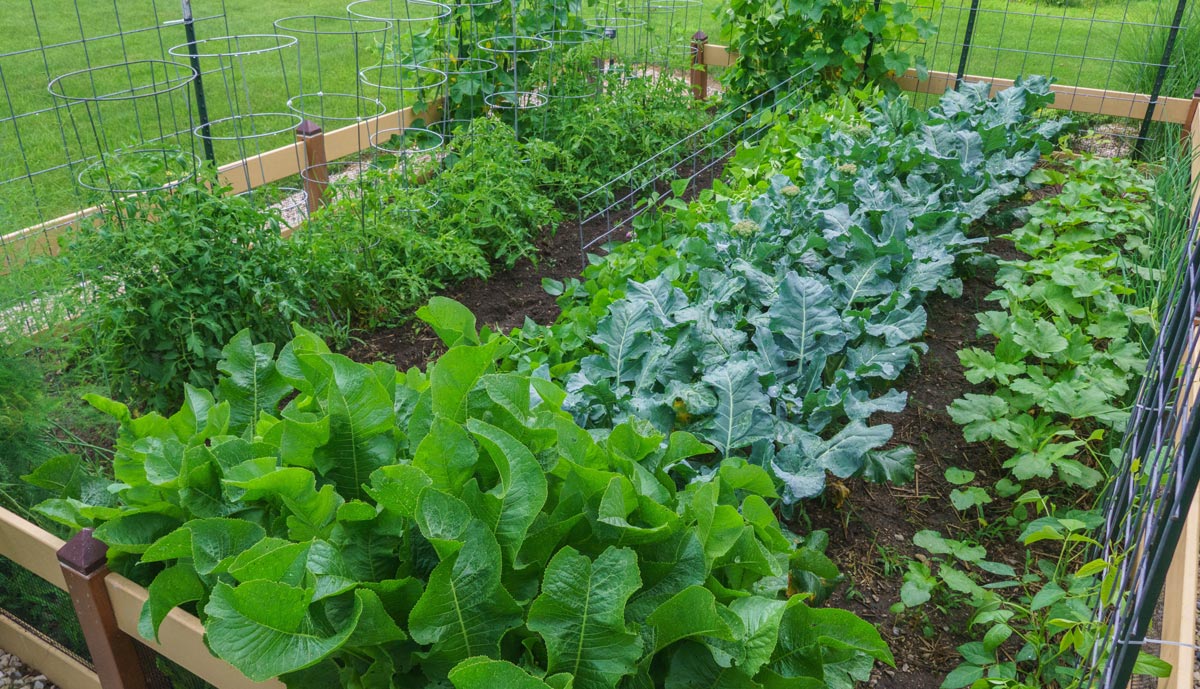
We enjoyed the freshly picked vegetables, fruits and herbs throughout the season. Shared some with our neighbors and friends. Pressure canned plenty of tomatoes. Pickled jalapeno peppers, onions, cucumbers and bell peppers. Filled our freezers to the brim with various cut vegetables. Blanched and then dehydrated some of the cayenne pepper and paprika. Most crops were done by the end of September. Removed the trellises and tomato cages, and stacked them all away. Now it's the long wait till the next growing season.
Thank you for reading Dispatch № 01.


